

Precision Temperature Control Gas Grills: A How-To Guide
Table of Contents
- Understanding Precision Temperature Control in Gas Grills
- How to Maintain Steady Grill Temperature
- Digital Grill Thermometer Selection and Use
- Best Gas Grills for Low and Slow Cooking
Last Updated: August 20, 2026
Understanding Precision Temperature Control in Gas Grills
Precision temperature control gas grills use integrated temperature sensors and automated burner modulation to maintain consistent heat across your cooking surface. A thermocouple or digital probe measures the grill's internal temperature in real time, increasing burner output when temperature drops below your set point and dialing back when it climbs above. This constant adjustment eliminates the guesswork that burns food on one side while leaving it undercooked on the other.
The system relies on a PID controller (proportional-integral-derivative) that adjusts burner flames based on real-time feedback. The difference with precision control is immediate: consistent results, predictable cooking times, and the confidence to leave your grill unattended for longer periods.
How to Maintain Steady Grill Temperature
Keeping your grill temperature stable requires attention to three critical factors: airflow management, burner configuration, and heat distribution across cooking zones.
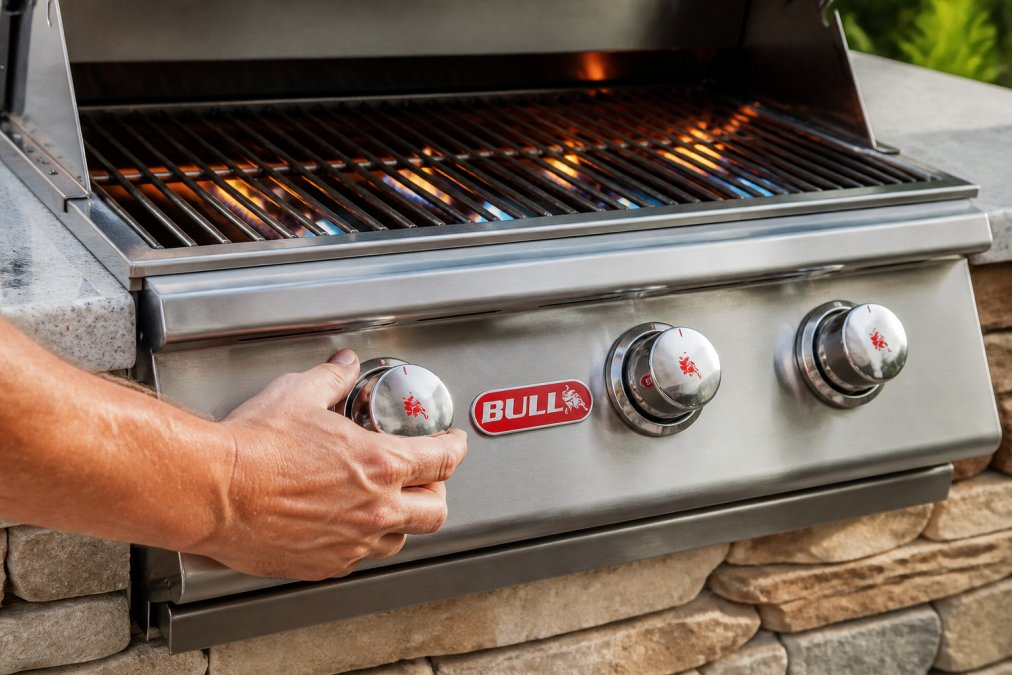
Most quality gas grills feature multiple independent burners that let you create temperature zones, hot zones for searing and cooler zones for gentler cooking. With precision temperature control, the system maintains your target temperature within each zone automatically.
Ventilation control is essential. Your grill's dampers and vents regulate airflow, which directly affects heat distribution. Partially closing vents reduces oxygen flow and lowers temperature; opening them increases it. Heat retention also matters: heavier grills with thicker steel (like the Bull Outdoor Products lineup) maintain temperature more steadily because they resist rapid temperature swings.
Indirect grilling techniques stabilize temperature by placing food away from direct flame and using the grill's lid to trap heat, creating a convection environment where hot air circulates around the food. Sensor calibration directly impacts stability, check your grill's manual for calibration procedures, as many models let you adjust the sensor reading to match an independent thermometer.
Digital Grill Thermometer Selection and Use
A quality digital grill thermometer is your verification tool, even when your grill has built-in precision control.
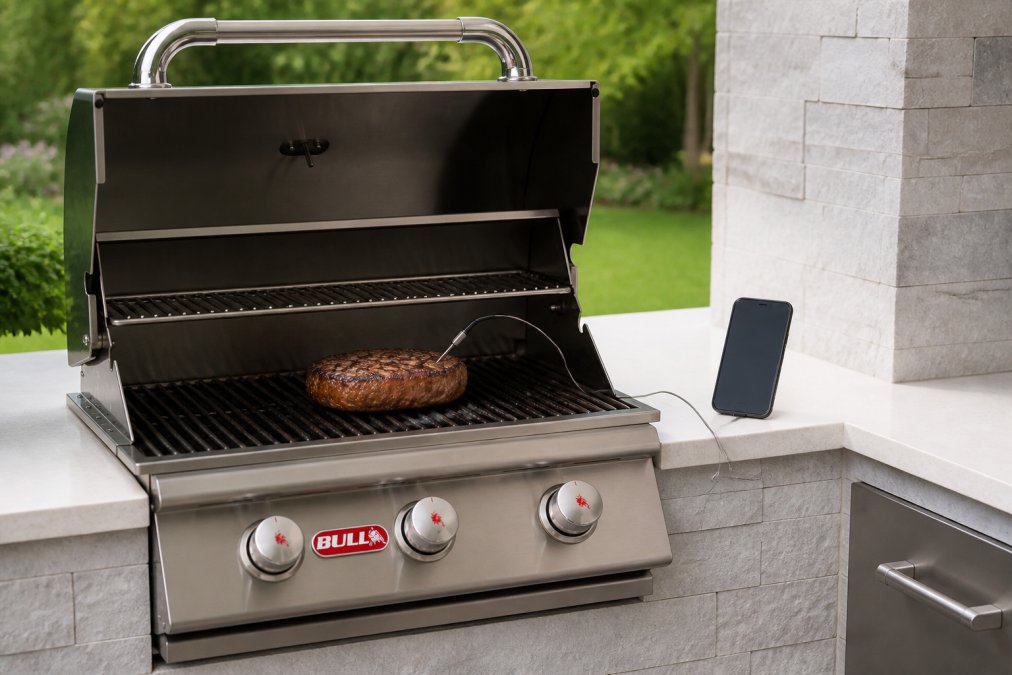
Choose a thermometer with a wireless probe and Bluetooth connectivity to monitor temperature from inside your home. These models transmit readings to your phone in real time, letting you track both grill temperature and internal meat temperature simultaneously.
For direct grill thermometers, position the probe at grate level, away from direct flame. Instant-read thermometers are essential for checking internal meat temperature, position the probe in the thickest part of the meat, away from bone, for accurate readings.
Calibrate external thermometers using the ice-bath test (should read 32°F) and boiling-water test (should read 212°F at sea level). If your thermometer drifts more than 2-3 degrees from these standards, replace it.
Best Gas Grills for Low and Slow Cooking
Low-and-slow cooking at temperatures between 225°F and 275°F over several hours demands precision temperature control that standard grills can't deliver. The best gas grills combine thermostatic control, excellent heat retention, and burner configurations that maintain steady, moderate temperatures.
The Bull Steer 24" 3 Burner Built-In Gas Grill excels for compact spaces. Its three independent burners let you create a cool zone by using only one or two burners, while stainless steel construction retains heat effectively. At $2,384, it's positioned for serious home chefs who prioritize precision.

The Bull Brahma 38" 5 Burner Built-In Grill delivers exceptional versatility. Five burners give you granular control over temperature zones, run just the outer burners at low heat for smoking while keeping the center burners off. The infrared back burner provides searing capability without compromising low-and-slow zones. At $4,464, it's ideal for chefs who want to do everything from brisket to steaks on the same grill.

The Bull Diablo 46" Built-In Grill Head is the powerhouse option. With six burners and 806 square inches of cooking surface, it offers the most granular temperature control possible. Its 14-gauge stainless steel construction provides exceptional heat retention. At $5,404, it's built for serious low-and-slow work.

Common mistakes include running all burners equally (which creates hot spots) and failing to use the grill's lid effectively. Keep the lid closed as much as possible to let the automated system stabilize your heat. Temperature stability during long cooks depends on fuel supply consistency, check your propane tank pressure at the start of a session, as a tank running low can't maintain steady burner output.
Precision temperature control transforms gas grilling from a skill that takes years to master into a repeatable process you can execute consistently. Outdoor Power & Grill's Bull lineup delivers the precision-grade equipment and heat distribution engineering that serious home chefs demand. Explore our selection of built-in grills and discover the confidence that comes from temperature control you can trust.
Frequently Asked Questions
How do I keep a gas grill at the same temperature?
Maintain steady grill temperature by adjusting burner modulation to match your target heat level, allowing the grill to heat soak for 10-15 minutes before cooking, and using a digital thermometer to monitor surface temperature. Position food in indirect zones away from direct flame, and avoid opening the lid frequently, which disrupts heat retention. For low and slow cooking, keep burners at 25-35% output and use a PID controller or thermostatic control system if available.
What is the best grill temperature controller?
The best temperature controller depends on your grill type and cooking style. Integrated thermostatic controls built into premium models like the Bull Brahma 38" offer automatic burner modulation for thermal accuracy. Standalone digital grill thermometers with wireless probes provide real-time monitoring for any grill. For advanced precision, look for systems with PID controllers that adjust burner output automatically. Calibration matters: check your thermometer against boiling water annually to ensure accuracy.
What is the difference between thermostatic control and manual adjustment?
Thermostatic control uses a thermocouple or sensor to automatically modulate burner output, maintaining your set temperature without manual input. Manual adjustment requires you to turn burner knobs up or down throughout cooking, which takes skill and attention. Thermostatic systems excel at heat stability and consistency, making them ideal for low and slow cooking or high-volume cooking. Manual control offers flexibility for quick temperature changes and costs less upfront, but demands active monitoring and experience.
Are smart gas grills worth the investment?
Smart grills with automated temperature regulation deliver measurable benefits: improved cooking consistency, reduced fuel waste, and the ability to monitor temperature remotely via app. For frequent entertainers or those cooking high-volume meals, the thermal accuracy and fuel efficiency justify the premium price. However, if you grill occasionally and enjoy hands-on cooking, a quality manual grill with a reliable digital thermometer may meet your needs at lower cost. Consider your cooking frequency and precision requirements before deciding.
This article was written using GrandRanker